Water Damage Restoration in Castle Rock, CO
Castle Rock is the Douglas County seat, a town of about 73,000 people at 6,224 feet that grew up around a rhyolite quarry in the 1870s and did most of its building after 1980. East Plum Creek runs north through the middle of it, past the old depot downtown and under I-25, and Sellers Gulch comes in from the east. The houses are two-stories and ranches over full basements, from the 1980s streets of Founders Village to the newest lots in Crystal Valley, nearly all of them on swelling clay with a sump pit in the mechanical room.
The creek has a history. In the June 1965 flood, fourteen inches of rain on Dawson Butte sent East Plum Creek through town at more than a thousand times its normal flow and took out roads and bridges on its way north. Today the water that reaches a Castle Rock basement is quieter: spring melt into the perimeter drain, a frozen hose bib line in a garage wall, or a water heater beside the furnace.
This site connects Castle Rock homeowners with an independent local water damage provider by phone. The provider walks the house, meters the basement, and writes the scope from the readings.
Castle Rock water damage, one basement at a time
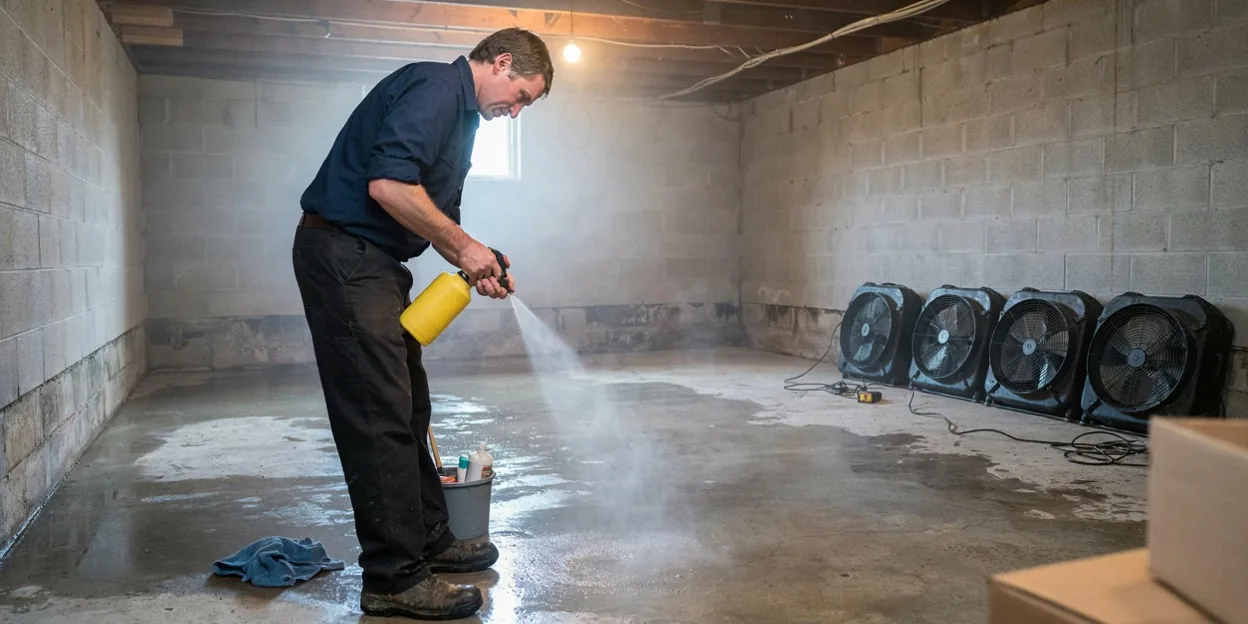
A pit that overflowed during a spring outage is a sump pump failure cleanup call, and the pad under the carpet is the first thing metered. A supply line that split in a December cold snap and ran through the family room ceiling is frozen pipe cleanup. Whatever the source, structural drying runs by the numbers until a closed basement with no windows reads dry.
Who turns the water off at the curb and who signs off on the rebuild in Castle Rock
Castle Rock Water runs the meters, the alluvial wells along East Plum Creek, and the purification plant on the north side, and it can close the curb stop when a leak is on the street side of the meter. Rebuild permits for drywall, plumbing, and electrical inside town limits go through the Town's Building Division, with applications filed through its online portal.
Call (303) 647-9733 and tell us what you found. We put you through to a local water damage provider serving Castle Rock.
Services Available in Castle Rock
Basement Flooding Cleanup
Water pumped out of a finished Castle Rock basement, then carpet pad, drywall, and framing metered to see what dries and what comes out.
Sump Pump Failure Cleanup
Cleanup after a pit overflowed during snowmelt or a power outage, with the basement floor, walls, and stored contents dried on a plan.
Frozen Pipe Cleanup
Water cleanup after a supply line froze and split in a garage wall, an attic run, or a hose bib, then dried what the thaw soaked.
Water Extraction
Standing water pulled off basement slabs, wood floors, and carpet with truck-mounted extractors before the drying equipment goes in.
Structural Drying
Air movers and dehumidifiers run by moisture readings until subfloor, studs, and drywall reach their dry target in thin Front Range air.
Burst Pipe Water Damage
The floors, ceilings, and finished rooms a failed supply line reached, extracted and dried once the main is closed.
Roof Leak Water Damage
Wet attic insulation, ceilings, and walls dried out after hail, wind, or a spring snow load opened a path through the roof.
Water Heater Leak Cleanup
A tank that let go in a basement utility room or garage, and the flooring, drywall, and stored boxes it soaked.