Structural Drying in Castle Rock, CO
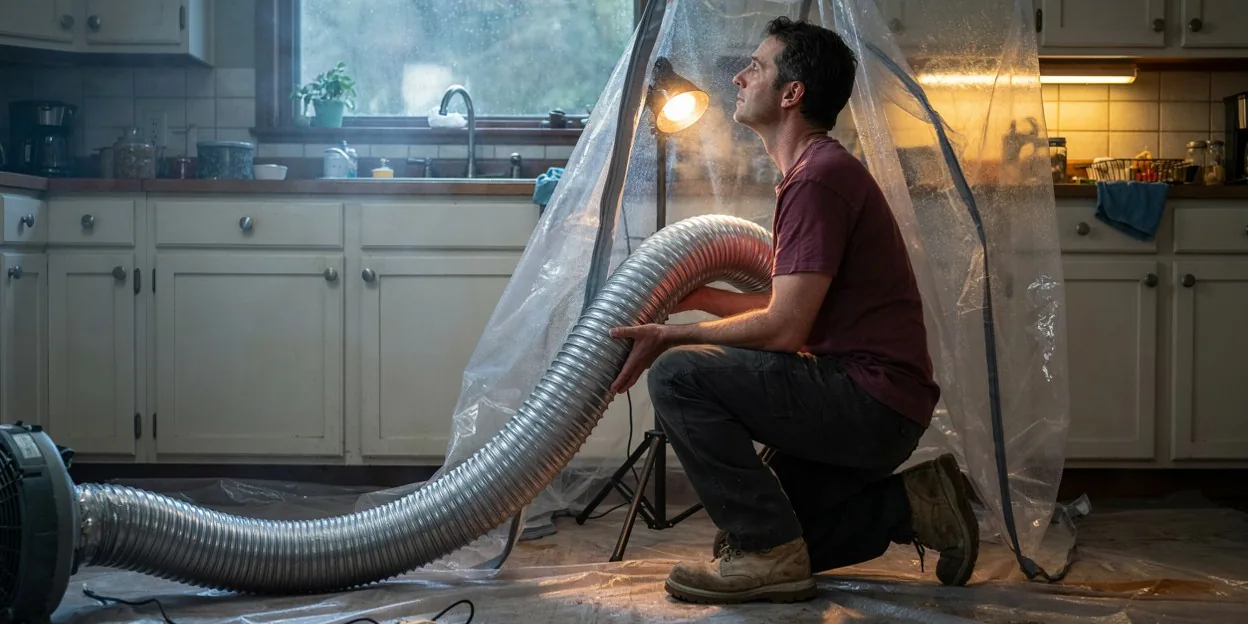
The water is gone. You ran the shop vac twice, set two box fans on the basement carpet, and the surface feels fine. The bottom of the drywall behind the couch is still soft, and the family room smells like a wet basement every time you open the door. This site connects you by phone with an independent local provider who dries homes in Castle Rock and across Douglas County until the readings say they are dry.
Reading the wall, not touching it
The crew begins with a meter on every material that could have gotten wet: carpet pad, the slab under it, the bottom plate of the framed wall, the drywall behind the baseboard, the studs, and the subfloor if the loss was on an upper floor. Each reading is compared to the same material in a dry part of the house. That comparison sets the drying goal.
Then the equipment goes where the map says, which is rarely where the puddle was. Air movers go where the readings are highest. A dehumidifier sized to the room pulls the moisture those movers release out of the air so it does not settle back into the drywall across the room. In a closed basement they often add a second unit, because a room without windows gives the air nowhere to go.
Keep the doors open and the thermostat where it is
Leave the equipment running. Turning off a loud air mover overnight can add a day to the job. Keep the basement doors open and the closet doors open so air moves through. Leave the thermostat where the crew set it, since warm air holds more water and dries the wall faster. Keep kids and pets out of the rooms with cords across the floor.
If you have pulled up any carpet or drywall yourself, save a piece for the crew and photograph where it came from. If a window well is full of snow or water, clear it, because that is where seepage re-enters.
Drywall, pad, and the floor you want to keep
Drying keeps the materials that can be kept. Framing, the slab, and the subfloor almost always dry in place. Drywall that only wicked an inch or two often dries on the wall with a cavity system that pushes air behind it. Drywall that reads wet a foot up comes out. Carpet pad after groundwater is replaced, and after a clean loss caught early it can sometimes stay.
Hardwood on the main floor gets drying mats that pull moisture up through the boards. Laminate rarely survives, because the fiberboard core swells and does not shrink back. The crew takes readings every day, logs them, and tells you when each material has hit its goal. That log is the same one your adjuster reads. Once the house is dry, the rebuild is a separate scope, and the crew tells you whether they do that part or a different contractor does.
Drying at 6,200 feet in a basement with no windows
Front Range air is dry most of the year, and a wet main-floor room with the windows open loses water fast. The rooms that matter in Castle Rock are the ones below grade. A finished basement in Founders Village or Crystal Valley Ranch has carpet on a slab, framed walls a few inches off the foundation, and no way for the air to leave. Moisture released from the pad ends up in the drywall on the far wall unless a dehumidifier is pulling it out.
Winter adds its own problem. Heated indoor air at this elevation runs very dry, which helps the wall, but a cold slab below a wet pad slows the process. The crew watches the slab temperature as well as the moisture reading. After a hailstorm opens a roof, the attic insulation is the slowest material in the house to dry, and the roof leak water damage side of the job carries its own readings.
Insurance adjusters read drying logs. A daily record of readings, equipment, and photos shows what was wet and when it stopped being wet. What your own policy covers is not something this site can say. It can say that the log is the document your claim rests on, and that the crew keeps it from the first visit. If the water came from a supply line that let go, the burst pipe water damage page covers what happens before the drying starts.
Calling about a Douglas County basement that stays damp
Say what got wet, how many days ago, and what you have already done. Mention whether the room is a finished basement and whether the smell has started. Call (303) 647-9733.