Water Heater Leak Cleanup in Castle Rock, CO
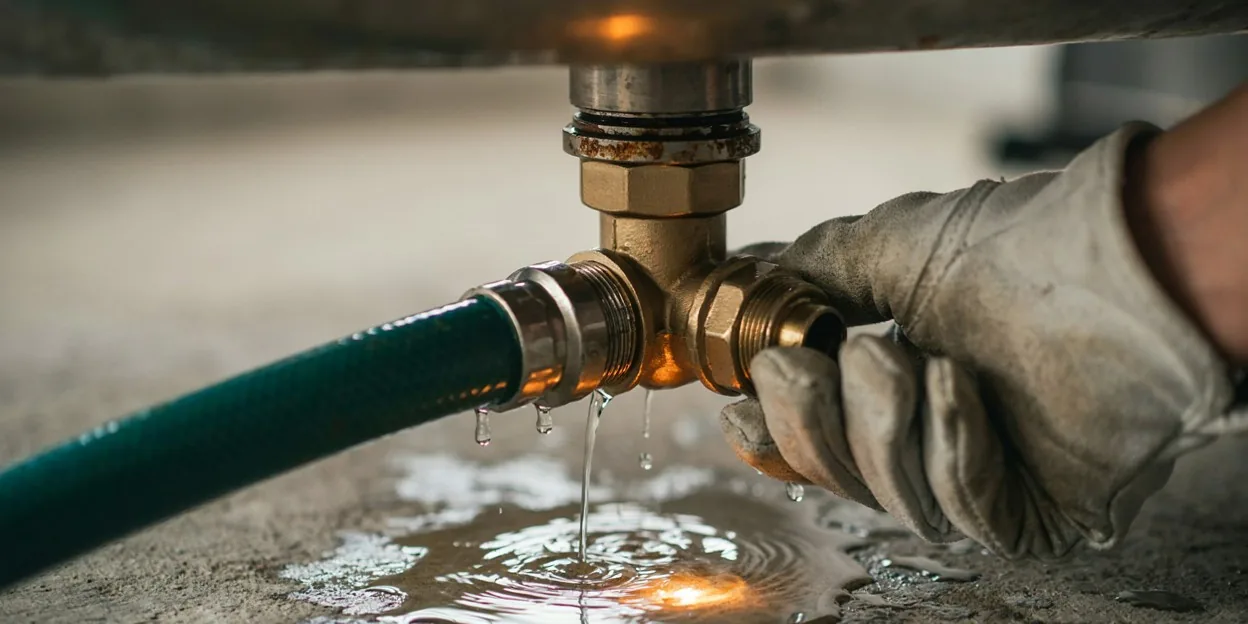
You went down to change the furnace filter and the utility room floor was wet from wall to wall. The tank next to the furnace had rusted through at the bottom seam, the pan under it had overflowed hours ago, and the water had run under the door and into the carpet of the finished room next to it. This site connects you by phone with an independent local provider who cleans up after water heater failures in Castle Rock and across Douglas County.
Cold water in, hot water out: shutting the tank down safely
The crew's first stop is the tank. They confirm the cold-water valve on top is closed and that the gas is off or the breaker is pulled, because a tank that keeps heating with no water in it is a different problem. Then they follow the water. A utility-room slab drains toward the floor drain if there is one and toward the door if there is not, and in most Castle Rock basements the door leads to carpet.
They meter the drywall behind the tank, the bottom of the furnace cabinet, the framed wall between the utility room and the finished space, and the carpet pad on the far side of that wall. A tank holds forty or fifty gallons, and the pressure line kept feeding it after the seam opened, so the footprint is usually bigger than the puddle you found.
While you wait: valves, breakers, and the boxes on the floor
Turn the cold-water supply valve above the tank clockwise until it stops. Turn the gas control to off, or switch off the breaker for an electric unit. If the furnace is standing in water, switch off its breaker too. Move the boxes and anything else off the wet floor and photograph the room before you do. Open the utility room door and the door to the next room so air moves.
If the tank sits in the garage, pull the cars out and lift anything stored along the shared wall with the house. Do not try to drain the tank yourself. A plumber replaces the heater; the cleanup provider dries the room, and both can happen the same day.
The slab dries, the pad goes, the furnace gets a closer look
A bare utility-room slab dries in place with air movement. Drywall behind the tank that wicked water is cut above the reading and the insulation behind it removed. The framed wall to the finished room usually dries from the utility side once the drywall is open. Carpet in the adjoining room is extracted and floated; the pad under it usually comes out.
The furnace is the item nobody thinks about. Water that reached the burner compartment or the blower housing needs an HVAC technician to look at it before it runs again. Cardboard boxes on the floor are a loss, and what was inside them gets sorted by what it is. Once the room is extracted, structural drying finishes the wall and the pad, and if the water ran across the whole basement, basement flooding cleanup covers the wider job.
Why the tank in a Castle Rock basement fails the way it does
Castle Rock water comes from deep Denver Basin wells and, increasingly, treated Plum Creek surface water. It is hard, and the minerals settle at the bottom of a tank and cook against the steel every time the burner fires. A tank in a house built in the 1990s in Founders Village or Plum Creek that has never been flushed is running on its second decade of that. Town water pressure is high enough that most homes have a pressure-reducing valve on the main, and when that valve wears, the extra pressure works on the tank and its relief valve.
Placement sets the damage. In most Castle Rock two-stories the tank lives in the basement utility room beside the furnace, a few feet from carpet. In some ranch plans it sits in the garage, where the cold shared wall meets the living space. Either way the water has somewhere finished to go, and a pan with no drain line only buys you the first gallon.
A tank that ruptures is usually a sudden loss under homeowner policies, though the heater itself is often not covered. A slow drip from a fitting that stained the wall over months is a different story. This site cannot say what your policy will do. The crew logs the readings, photographs the tank and the room, and writes the scope your adjuster will ask for.
Calling about a Castle Rock water heater that failed
Say where the tank is, whether the valve on top is closed, and whether the furnace or any outlet was standing in water. Mention whether the water reached the carpet in the next room and what was stored on the floor. Call (303) 647-9733.